

In almost every news, app, or conversation today, you’ll hear about Artificial Intelligence (AI). But what is AI, and how is it shaping our daily lives? This article dives deep into AI concepts like machine learning, neural networks, natural language processing (NLP), and robotics, explaining everything in simple, practical terms. Whether you’ve heard terms like “chatbot” or “self-driving car,” by the end of this article you’ll not only understand Artificial Intelligence clearly you’ll feel ready to engage with it confidently.
What is Artificial Intelligence (AI)?
Artificial Intelligence, often called AI, is a broad term used to describe computer systems or machines that can perform tasks that usually require human intelligence. In simple words, AI is when computers are programmed to “think” or “act” in ways that seem smart just like humans do. These smart systems can learn from experience, solve problems, understand languages, make decisions, and sometimes even show creativity.
For example, when you use your phone’s voice assistant (like Siri or Google Assistant) and it understands your questions, that’s AI in action. When Netflix recommends shows you might like based on your past watching habits, it’s using AI to predict your preferences.
AI works by combining large amounts of data with fast, powerful computers and smart algorithms step-by-step instructions that tell the computer how to learn and make choices. There are many areas that help AI work well, such as:
- Machine Learning: Teaching computers to learn from data and improve over time without being told exactly what to do each time.
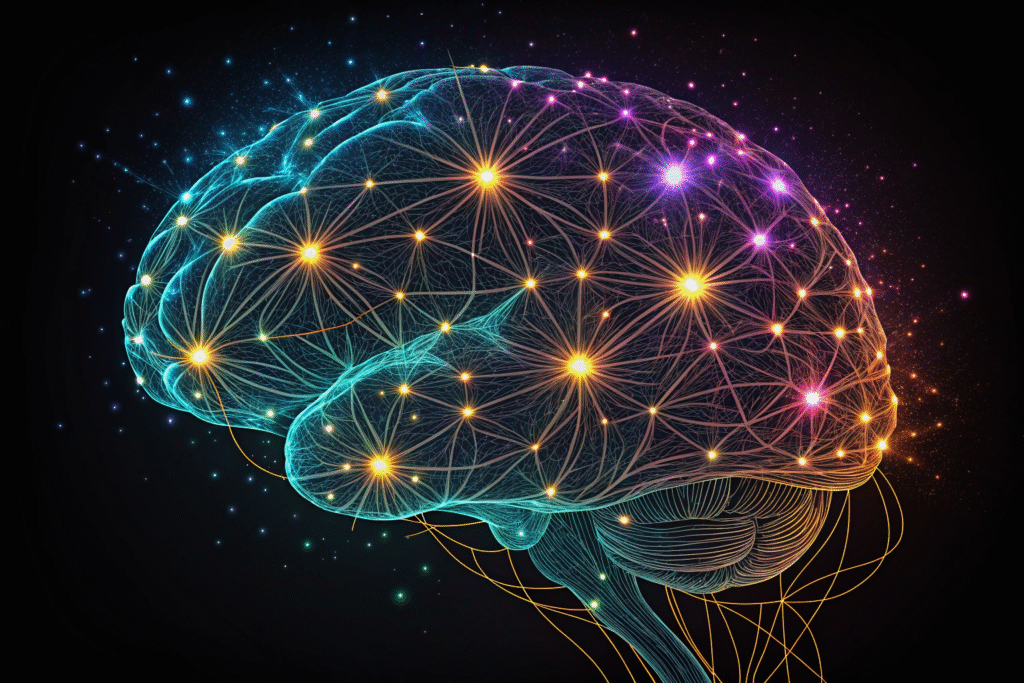
- Deep Learning: Using computer networks that mimic how the human brain works to recognize patterns in images, sounds, or text.
- Natural Language Processing: Helping computers understand, interpret, and respond to human language.
- Data Analytics: Analyzing large sets of data to find patterns and insights.
- Linguistics: The science of language, which helps AI understand and process words and sentences.
In summary, Artificial Intelligence is all about making machines smarter, so they can assist people, make life easier, and solve problems in ways that once seemed impossible for computers. Whether it’s through talking, seeing, moving, or thinking, AI aims to bring human-like abilities to technology making it a helpful tool in our daily lives.
A Brief History of AI
1950s–60s: Conception of “thinking machines” by pioneers like Alan Turing.
1970s–80s: Early AI based on rule-driven “expert systems.”
1990s: Shift to statistical machine learning techniques.
2000s–present: Boom in deep learning and neural networks. AI now powers voice assistants, autonomous vehicles, image recognition, and more
Core Technologies Behind AI
Machine Learning
A set of methods where computers learn from data rather than just rules. These include:
- Supervised Learning: Learning from labeled data (e.g. cat vs. dog images).
- Unsupervised Learning: Detecting patterns in unlabeled data.
- Reinforcement Learning: Learning through trial-and-error rewards (e.g., a robotic hand learning to grasp).
Neural Networks & Deep Learning
These mimic the structure of the human brain with layers of “neurons”. Deep learning neural networks with many layers can recognize complex patterns in images, speech, and language .
Natural Language Processing (NLP)
NLP helps machines understand and generate human language. It’s behind chatbots, translation tools like Google Translate, and voice assistants like Siri and Alexa wikipedia.
Robotics & Intelligent Systems
Here, AI enables machines from vacuum cleaners to drones and self-driving cars to perceive, navigate, and act in the real world.

Everyday Applications of AI
- Voice Assistants: Siri, Alexa, Google Assistant.
- Recommendations: Netflix, YouTube, Spotify, Amazon personalize suggestions.
- Medical Imaging: AI helps detect diseases from X-rays and MRIs.
- Credit & Fraud Detection: Banks use AI to identify suspicious transactions.
- Customer Support: Chatbots handle routine inquiries.
- Autonomous Vehicles: Tesla, Waymo, and others use AI for navigation.
- Smart Home Devices: Thermostats, lights, and security systems learn user patterns all thanks to AI.
The Impact of AI
- Work: Automates repetitive tasks freeing people for creative roles.
- Education: Adaptive learning platforms personalize teaching.
- Economy: Boosts productivity and innovation.
- Society: Raises questions on fairness, privacy, and job shifts.
Challenges & Ethical Concerns in AI
- Ethical frameworks: Principles from IEEE and government bodies aim to guide responsible AI living .
- Privacy: With AI analyzing personal data, protecting privacy is crucial.
- Bias and fairness: AI must avoid reinforcing societal biases.
- Regulation & control: How do we ensure AI remains safe and accountable?
How You Can Start Learning AI
- Grasp the basics: Understand ML vs. rule-based systems vs. AI capabilities.
- Try free tools: Explore ChatGPT for conversation, ML models that analyze images or text.
- Take beginner-friendly online courses: Platforms like Coursera, Khan Academy, or edX.
- Create mini‑projects: Build a chatbot, image recognizer, or data visualizer.
- Participate in communities: Follow AI news, join forums, and attend virtual meetups.
Frequently Asked Questions (FAQ)
Q: Will AI replace humans?
A: AI takes over routine tasks but augments creativity and complex decision-making enhancing human roles.
Q: Is AI dangerous?
A: Not inherently risks arise without proper oversight. Ethical use and regulation are key.
Q: How can I learn more?
A: Enroll in courses, read beginner-friendly books on AI, and practice by building projects.